How Many Teeth Can a Dental Implant Hold? Ask a Warren County Dentist
Missing one or more teeth affects more than your smile. It can change how you chew, how you speak, and how confident you feel in daily life. Dental implants have become one of the most reliable ways to replace missing teeth, but many patients still have basic questions before moving forward. One of the most common questions we hear at Warren County Dental Center is simple: how many teeth can a dental implant hold?
The answer depends on your specific situation, including how many teeth are missing, where they are located, and the condition of your jawbone. In this article, we will walk through how implants work, whether one implant can support two teeth, how many implants a person can receive at one time, and what factors your dentist considers before recommending a treatment plan.
If you are exploring dental implants for multiple teeth or trying to understand your options after losing several teeth, this guide should help you enter your consultation with a clearer picture of what to expect.
What Is a Dental Implant and How Does It Work
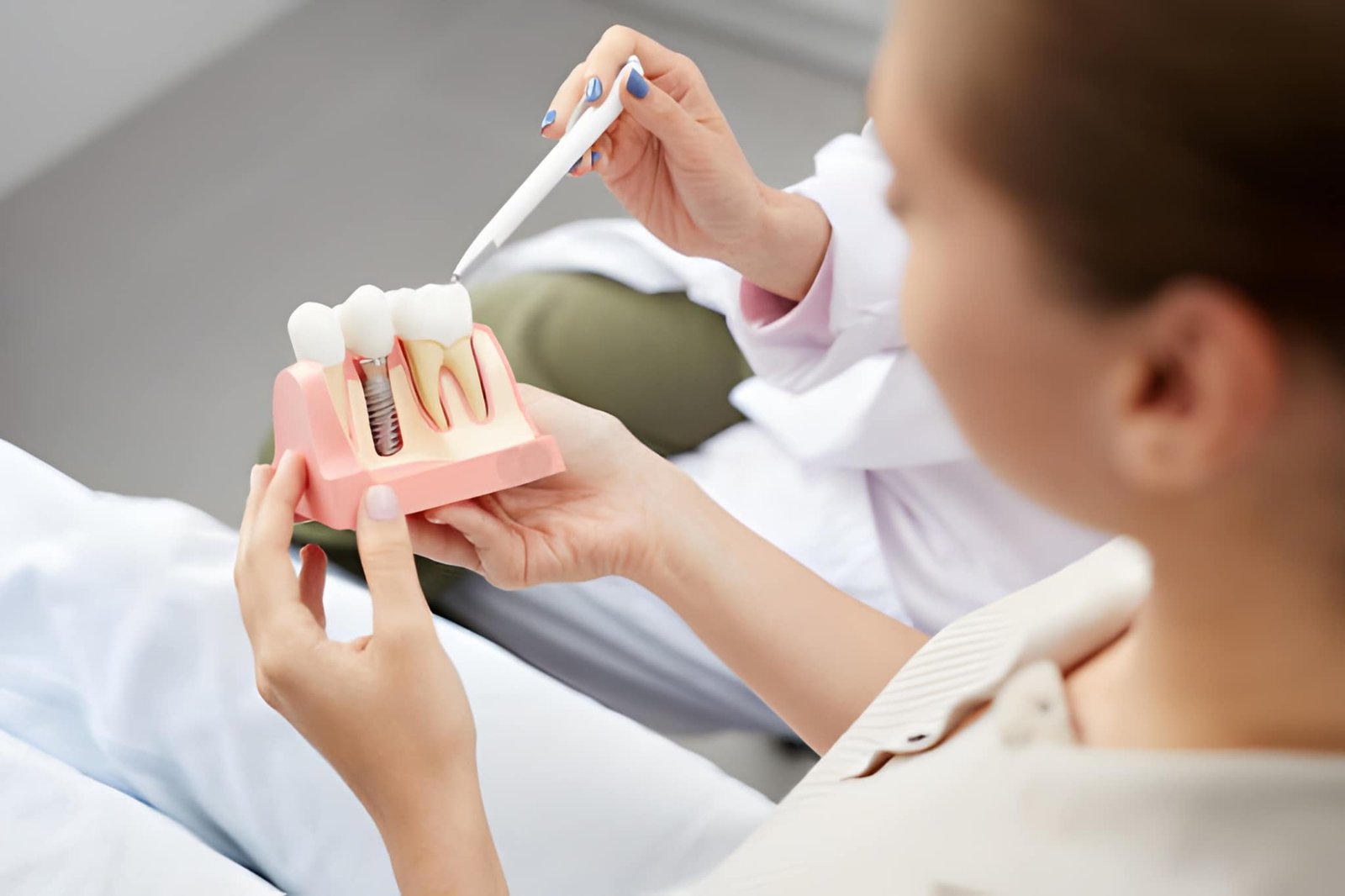
A dental implant is a small titanium post that is placed into the jawbone to act as an artificial tooth root. Once the implant has fused with the bone through a process called osseointegration, it becomes a stable foundation for a replacement tooth or teeth.
The Basic Structure of an Implant
Every implant restoration is made up of three parts. The implant post is placed below the gum line and anchors into the jawbone. The abutment connects the implant to the visible restoration. The crown, bridge, or denture sits on top and is the part you see when you smile.
This three part structure is what allows implants to be so versatile. A single implant post does not always have to support just one tooth. Depending on the case, it can support a crown, be part of a bridge, or help anchor a larger restoration.
How Many Teeth Can One Dental Implant Support
This is where the answer becomes more nuanced. A single implant post is typically designed to replace one missing tooth root, but the number of teeth it can support above the gum line can vary.
Single Tooth Replacement
In the most straightforward case, one implant supports one crown, replacing one missing tooth. This is the most common and predictable approach, especially when only a single tooth is missing and the surrounding teeth and bone are healthy.
Two Teeth on One Implant
Many patients specifically ask about a dental implant for two teeth, or whether one implant can hold 2 teeth. In certain situations, yes, a single implant can support a small bridge that replaces two adjacent teeth. This is sometimes referred to as a cantilever bridge or a two unit restoration anchored by one implant.
This approach is not right for every patient. It works best when the bone is strong enough to handle the additional bite force and when the missing teeth are positioned in a way that allows a bridge to sit properly without placing excess strain on the implant. Your dentist will evaluate your bone density, bite alignment, and the location of the gap before recommending this option.
Multiple Teeth on a Few Implants
For patients missing several teeth in a row, or even a full arch, it is not necessary to place one implant for every missing tooth. Instead, a small number of implants can support a longer bridge or a full denture. For example, four to six implants are often enough to support an entire arch of replacement teeth. This is a common solution for patients who ask how many dental implants for multiple teeth they will actually need, since the goal is to use the fewest implants necessary while still providing a stable, long lasting result.
How Many Dental Implants Can You Get at One Time
Another frequent question is how many dental implants can be placed at one time. The answer depends on several factors, including your oral health, bone density, treatment goals, and the complexity of your case. Some patients may only require one or two implants to replace missing teeth, while others who need to restore multiple teeth or a full arch may have several implants placed during a single procedure. As a trusted family dentist in Warren County, Warren County Dental Center creates personalized treatment plans based on a comprehensive evaluation, ensuring each patient receives the most appropriate and effective solution for their long-term oral health. The exact number of implants suitable for you will be determined through a clinical examination, diagnostic imaging, and a detailed discussion with your dentist.
Factors That Determine How Many Implants You Need
There is no single formula that applies to every patient. Several factors influence how many implants are recommended and how many teeth each one can support.
Bone Density and Jaw Health
Implants rely on a strong connection with the jawbone. Patients with sufficient bone density may be good candidates for fewer implants supporting a larger bridge. Patients with bone loss may need additional implants for support, or may require a bone graft before treatment can begin.
Location of Missing Teeth
Teeth in the front of the mouth handle different bite forces than molars in the back. Because back teeth absorb more pressure during chewing, they often require more support, which can affect how many implants are recommended in that area.
Overall Oral Health
Gum disease, teeth grinding, and existing dental work can all influence the treatment plan. A thorough evaluation helps determine whether your mouth can support a two teeth on one implant approach or whether individual implants are a safer long term choice. Keeping up with routine dental cleaning Washington NJ before and after treatment also helps keep your gums healthy, which supports better outcomes for any implant procedure.
Budget and Long Term Goals
Cost and long term maintenance also play a role. Some patients prefer to space out treatment over time, starting with the most urgent missing teeth and adding implants later. Others prefer to address multiple missing teeth in one coordinated plan. Your dentist can walk you through the trade offs of each approach.
Benefits of Choosing the Right Implant Plan
Working with an experienced dentist to determine the right number of implants offers several advantages. A well planned approach helps distribute bite force evenly, reduces strain on any single implant, and supports the long term stability of your restoration. It can also be more cost effective than placing an implant for every single missing tooth when a bridge or partial denture can achieve the same result with fewer implants.
Choosing the right plan also protects your existing teeth. Implants that are properly placed and appropriately spaced help prevent unnecessary pressure on neighboring natural teeth, which supports better oral health over time.
What to Expect During Your Consultation
If you are considering dental implants, your first step is a consultation. During this visit, your dentist will review your dental and medical history, take X-rays or 3D imaging to assess bone structure, and discuss how many teeth are missing or need to be replaced.
From there, your dentist will explain your options, whether that means a single implant, an implant supporting two teeth, or a broader plan involving multiple implants. You will also have the chance to ask questions about the timeline, healing process, and what to expect at each stage of treatment.
Why Choose Warren County Dental Center
At Warren County Dental Center, our team takes a personalized approach to every implant consultation. As a trusted general and family dentist Washington NJ patients rely on, we understand that no two smiles are the same. We take the time to evaluate your bone health, bite, and overall oral condition before recommending a treatment plan, whether you need one implant or several.
Patients throughout the region choose our practice because we combine clear communication with modern dental technology. If you have been searching for a Warren County dentist who can explain your implant options in plain language, our team is here to help you understand exactly what your treatment will involve before you commit to a plan. You can learn more about our full range of services by visiting our website at Warren County Dental Center.
Ready to Explore Your Implant Options
Understanding how many teeth a dental implant can hold is an important first step, but every mouth is different. The best way to know what will work for you is a personal consultation with a dentist who can evaluate your specific needs. Whether you are missing one tooth or several, our team at Warren County Dental Center is ready to walk you through your options and build a plan that fits your smile and your budget.
Book an Appointment with our team today and take the next step toward a healthier, more complete smile.
Frequently Asked Questions
1. Can one dental implant really hold two teeth?
Yes, in certain cases a single implant can support a small bridge that replaces two adjacent teeth. This depends on bone strength, the location of the gap, and how the bite comes together. Your dentist will confirm if this is a good option for your specific case.
2. How many dental implants can you get at one time?
The number varies by patient. Some people receive one or two implants in a single visit, while others undergoing full arch restoration may have several implants placed during one surgical appointment. Your dentist will determine the safest and most effective approach for you.
3. Is it better to get one implant per missing tooth?
Not always. While one implant per tooth is common for isolated gaps, it is often unnecessary and more costly for patients missing several teeth in a row. A bridge or partial denture supported by fewer implants can achieve the same functional and aesthetic result.
4. How do I know how many implants I need?
The only way to know for certain is through a dental exam that includes imaging of your jawbone and a discussion of your missing teeth. Bone density, gum health, and the location of the gaps all factor into the final recommendation.
5. Are dental implants for multiple teeth more expensive than individual implants?
It depends on the approach. In many cases, using fewer implants to support a bridge or denture is more cost effective than placing an individual implant for every missing tooth, since fewer surgical sites and components are involved.
6. Do implants require special care after placement?
Implants should be brushed and flossed like natural teeth, and regular checkups help your dentist monitor the surrounding bone and gum tissue. Good oral hygiene supports the long term success of any implant restoration.
